Best Self-Cleaning Litter Box for Kittens (and Why Most Aren't Safe Yet)
Our top picks
 Best for kittens overall: automatic from 2.2 lb, Kitten Mode below that, open top, about $360–450Neakasa M1 Open-Top Self-Cleaning Litter BoxOpen-top · 2.2–33 lb · cats: not stated8.3Price tier: Mid-rangeCheck price on Amazon
 Best to grow into: semi-automatic until 3 lb, then up to 25 lb and four cats, about $699–749Whisker Litter-Robot 4Rotating globe · 3–25 lb · up to 4 cats8.7Price tier: PremiumCheck price
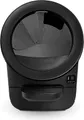 Best compact Litter-Robot: semi-automatic until 3 lb, about $599Whisker Litter-Robot EVORotating globe · 3–19 lb · up to 2 cats8.6Price tier: PremiumCheck price
 Lowest-risk design: open tray and a rake; keep it unplugged until 6 months, about $100–140PetSafe ScoopFree Crystal Classic Self-Cleaning Litter BoxRake + crystal tray · up to 15 lb · up to 2 cats7.8Price tier: BudgetCheck price
Most self-cleaning litter boxes aren’t built for small kittens. Nearly every maker sets a minimum cat weight for automatic mode, and several add a minimum age of six months. A kitten under that line may not register on the box’s sensors the way the maker intends, and a box that doesn’t know a cat is there can start a cycle.
So the honest answer to “which self-cleaning box is best for my kitten?” is often “none of them in automatic mode, yet.” What you can do is buy a box your kitten will grow into, run it manually or in a kitten mode for now, and turn on automatic cleaning once your kitten passes the maker’s minimum.
We haven’t tested these boxes ourselves. This guide is built from maker spec pages and FAQs, Amazon listing text and independent reviews, and where a test result appears, we name the outlet. It isn’t veterinary advice. Ask your vet about litter choice, litter box habits and any health questions for a young kitten.
The short version
- Best for kittens overall: the Neakasa M1. Automatic cleaning from 2.2 lb, a Kitten Mode below that, and an open top with no hood or door.
- Best to grow into: the Litter-Robot 4. Semi-automatic until 3 lb, then rated to 25 lb and up to four cats.
- Best compact option: the Litter-Robot EVO. Same 3 lb rule, smaller footprint, two cats.
- Lowest-risk design: the PetSafe ScoopFree Crystal Classic. A rake across an open tray, nothing that encloses the cat. PetSafe says to keep it unplugged until 6 months.
Not sure where your kitten stands? Enter its weight and age in our cat safety checker and it will flag which boxes can run automatically today.
Why most boxes aren’t kitten-safe yet
A self-cleaning box has to know when a cat is inside or nearby so it can wait. Some rely only on weight sensors, like the Litter-Robot EVO and ScoopFree SmartSpin. Others pair weight with a laser curtain (Litter-Robot 4 and 5), proximity sensors (PETKIT), infrared (Neakasa M1) or radar (Leo’s Loo Too).
The maker’s minimum weight is the lightest cat it says can use automatic mode. Below it, the maker isn’t promising the box will notice your kitten. That’s why the instructions for small kittens are nearly always some version of “turn automatic cleaning off.”
The stakes are real. In October 2024, cats.com reported that a cat died when the door of a self-cleaning box closed on her neck. A reviewer traced it to a box sold by Amztoy on Amazon, unrelated to Whisker’s Litter-Robot. WIRED’s buying guide says it doesn’t recommend devices that close completely “because of the potential that the machine could not sense the cat and kill it.” For a kitten, both rules matter: respect the weight minimum, and pick a design that never closes around the cat.
Choose a box whose entrance stays open through the whole cycle. WIRED won't recommend boxes that close completely while cleaning.
Weight sensors can miss light cats. Kittens and small cats under the maker's minimum should use the box with automatic cleaning off.
Weight plus laser, infrared, radar or proximity sensing gives a second chance to notice a cat. Weight-only boxes rely on one signal.
Keep a manual box out during the switch and whenever the robot is offline. One per cat plus one is the AAFP rule of thumb.
Full checklist in are self-cleaning litter boxes safe? and our kitten guide.
For the full picture on sensors, incidents and recalls, see are self-cleaning litter boxes safe?
Every model’s minimum weight and age
These are the makers’ own figures for automatic mode, from spec pages, FAQs and Amazon listing text. “Not stated” means we couldn’t find a figure from the maker.
| Box | Minimum weight | Minimum age | What the maker says to do below it |
|---|---|---|---|
| Neakasa M1 | 2.2 lb | Not stated | Turn off automatic cleaning and use Kitten Mode |
| Leo’s Loo Too | 1 lb to detect a cat (WIRED) | Not stated | Rated from 1 lb; we’d still keep automatic cleaning off and supervise |
| ScoopFree SmartSpin | 2.5 lb | 6 months | Keep it unplugged or auto-clean off until both are met |
| Litter-Robot 4 | 3 lb | Not stated | Leave it powered off and cycle by hand (semi-automatic) |
| Litter-Robot 5 | 3 lb | Not stated | Semi-automatic mode until 3 lb |
| Litter-Robot EVO | 3 lb | Not stated | Semi-automatic mode until 3 lb |
| PETKIT PuraMax 2 | 3.3 lb | Not stated | No kitten instructions we could confirm; the box has a manual mode |
| Purobot Max Pro 2 | 3.3 lb | 6 months | Cats over 3.3 lb and older than 6 months |
| Purobot Ultra | 3.3 lb | 6 months | Recommended for cats 6+ months and at least 3.3 lb |
| Lesure Open-Top | 3.3 lb | 6 months | Not for kittens under 6 months |
| Furbulous Self-Packing | 3.3 lb | Not stated | Listing says cats over 3.3 lb |
| ScoopFree Crystal Smart | Not stated | 6 months | Keep it unplugged and scoop by hand until 6 months |
| ScoopFree Crystal Classic | Not stated | 6 months | Keep it unplugged and scoop by hand until 6 months |
| ELS PET Orbitie | Not stated | Not stated | No minimum we could confirm; don’t run it automatically for kittens |
Kittens under the minimum should use the box with automatic cleaning off. Check your own cat in the safety checker.
A few figures disagree between sources. WIRED’s spec box lists the Litter-Robot 4 at a 4 lb minimum, and WIRED gives the PuraMax 2 as 3.5–18 lb, against PETKIT’s 3.3–22 lb. Where sources differ, use the higher minimum. If you’re buying used, note that the discontinued Litter-Robot 3 Connect needed cats of at least 5 lb for automatic mode.
Kitten modes and semi-automatic modes
“Kitten mode” sounds like a special safe setting. On most boxes it simply means automatic cleaning is off, and you’re in charge of when it sifts.
Whisker: semi-automatic
For the Litter-Robot 4, 5 and EVO, Whisker says to leave the unit powered off and start cycles yourself until the kitten weighs 3 lb. In practice you start a cycle only when you can see the kitten is out of the room. Your kitten still learns the box it will use as an adult.
Neakasa: Kitten Mode
Neakasa says cats under 2.2 lb should use Kitten Mode, which turns automatic cleaning off so the box won’t self-clean. WIRED notes the newer M1 Plus has a kitten mode and works for cats as light as 2.2 lb.
PETKIT: manual and scheduled modes
The PuraMax 2’s Amazon listing describes automatic, scheduled and manual modes. PETKIT’s FAQ gives 3.3 lb as the minimum for automatic mode. Below that, manual mode is the setting to use. The Purobot Max Pro 2 and Ultra add a 6-month age minimum.
PetSafe: unplugged
PetSafe’s guidance for ScoopFree crystal boxes is to keep the unit unplugged and scoop by hand until a kitten is 6 months old. The SmartSpin listing says the same until a kitten is at least 2.5 lb and 6 months old.
What to do until your kitten reaches the minimum
- Use a regular box, or the self-cleaning box with automatic mode off. Either works. Using the new box manually gets your kitten used to it early.
- Scoop at least daily. That’s the AAFP’s guidance for any litter box, and a manual-mode automatic box is no exception.
- Only cycle when you can see the kitten elsewhere. On Whisker and PETKIT boxes in manual or semi-automatic mode, start the cycle yourself, then stay nearby until it finishes.
- Keep a second box. The AAFP’s rule is one box per cat plus one. See how many litter boxes per cat.
- Weigh your kitten regularly. You need the actual number, not a guess, to know when it passes the minimum. Your vet can weigh it at checkups.
- Switch on automatic mode only when both limits are met. If the maker gives an age as well as a weight, wait for both. Watch the first few cycles, and use the longest delay the app offers.
If you also have an adult cat
An adult cat in the house doesn’t change the kitten’s limit. If the kitten can reach the self-cleaning box, keep automatic mode off until the kitten passes the minimum, even though your adult cat would be fine. Alternatively, run the self-cleaning box in a room the kitten can’t get into and give the kitten its own regular box. You can check both cats at once in the safety checker.
When it’s time to switch, our transition guide walks through the steps.
The least risky picks
1. Neakasa M1: best for kittens overall
The Neakasa M1 has the lowest automatic threshold of the mainstream boxes in our data: 2.2 lb, with Kitten Mode below that. It’s open on top, so there’s no hood or door to close around a small cat, and Neakasa pairs five infrared sensor pairs with four weight sensors. The range runs to 33 lb, so it won’t be outgrown.
Tom’s Guide’s cats used it 51 times in a week, more than any of the other three boxes in that test, which is a good sign for a hesitant young cat. The downsides: the open sides fling litter, so plan on a big mat, and WIRED found wet litter stuck to the back grate.
Buy carefully. Neakasa published a notice about fake M1 listings, and WIRED didn’t recommend the original M1 because of controversies over safety, faulty sensors and counterfeits. It picks the M1 Plus instead, about $430–450. The base M1 is about $360–380. Check the Neakasa M1 price and confirm the seller is Neakasa.
2. Litter-Robot 4: best to grow into
The Litter-Robot 4 needs your kitten to reach 3 lb before automatic mode. Until then, Whisker’s semi-automatic routine applies. After that, it’s rated to 25 lb and up to four cats, with a laser curtain plus weight sensors, and WIRED counts it among boxes that stay open while cycling.
It’s expensive at about $699–749, and WIRED’s unit started sensing “ghost cats” after nearly two years. But it’s the box we rank highest overall, and a kitten will never outgrow it. Check the Litter-Robot 4 price.
3. Litter-Robot EVO: best compact option
The Litter-Robot EVO follows the same 3 lb rule in a smaller 20.6 × 24.3 in footprint, for about $599. WIRED found it near-silent and its cat took to it quickly. Two limits to plan around: it relies on weight sensors only, and it’s rated for two cats up to 19 lb. A big adult breed may outgrow it. Check the EVO price.
4. PetSafe ScoopFree Crystal Classic: lowest-risk design
The ScoopFree Classic is a low, open tray with a rake that PetSafe says only runs when the cat isn’t in the box. Nothing turns or closes. PetSafe still says to keep it unplugged until 6 months, so for a young kitten it’s simply a tray box at first.
It costs about $100–140, but the disposable trays run about $24.50 each (3-pack, $73.49 at PetSafe) and it’s designed for cats up to 15 lb. It needs crystal litter, so ask your vet whether that suits your kitten. The Crystal Smart adds an app for about $186–300. Check the ScoopFree Classic price.
Also worth a look
- Lesure Open-Top, about $250. WIRED’s budget pick, open-top, with six infrared sensors, but not for kittens under 6 months. Treat 15 lb as the real maximum, since the listing gives both 15 and 18 lb.
- Leo’s Loo Too, about $599. WIRED says it needs only 1 lb to detect a cat, and it adds radar and an anti-pinch sensor. No sensor makes an unsupervised young kitten risk-free, though, and WIRED’s 12-lb cat found it cramped.
Boxes to skip with a kitten
- Anything that closes completely while cycling. WIRED won’t recommend the Petlibro Luma or PetSnowy Snow+ for this reason.
- The Furbulous Self-Packing. Cats.com says its door-and-scoop design could trap a cat if the sensors failed, and one reviewer said it happened.
- The ELS PET Orbitie, for now. ELS PET publishes no minimum cat weight we could find.
- Pet Zone Smart Scoop. WIRED says its rake doesn’t stop if something jumps in.
Bottom line
For a kitten under the maker’s minimum, any self-cleaning box is a manual box. Buy the one your cat will use as an adult, keep automatic mode off until it passes the weight and age limits, and keep a regular backup box. The Neakasa M1 starts automatic cleaning the earliest. The Litter-Robot 4 is the one we’d want long term. Compare every model side by side on the litter box chart, and pick up litter and liners on our accessories page.
Frequently asked questions
At what age can a kitten use a self-cleaning litter box?
Can a kitten use a Litter-Robot?
What is Kitten Mode on the Neakasa M1?
Is a crystal rake box safe for kittens?
What should I use until my kitten is big enough?
Sources
- Whisker: Litter-Robot 4 · checked 2026-11-12 — 3–25 lb, up to 4 cats; kittens need 3 lb for automatic mode; under 3 lb use semi-automatic mode (leave it powered off and cycle manually); laser and weight sensors.
- Whisker: Litter-Robot EVO · checked 2026-11-12 — Rated for 3–19 lb cats and up to 2 cats; relies on weight sensors.
- Whisker: Litter-Robot 5 · checked 2026-11-12 — Rated for 3–30 lb cats and up to 5 cats; multiple lasers plus weight sensors.
- Whisker: Litter-Robot 3 Connect · checked 2026-11-12 — Discontinued; needed cats of at least 5 lb for automatic mode.
- Neakasa: M1 product page · checked 2026-11-12 — Recommended for 2.2–33 lb cats; Kitten Mode for cats under 2.2 lb turns automatic cleaning off; 5 IR sensor pairs plus 4 weight sensors.
- PETKIT: Purobot Max Pro 2 · checked 2026-11-12 — Rated for 3.3–22 lb cats; 12 safety sensors.
- Amazon: PetSafe ScoopFree SmartSpin listing · checked 2026-11-12 — Keep it unplugged or auto-clean off until a kitten is at least 2.5 lb and 6 months old.
- Amazon: Lesure Open-Top listing · checked 2026-11-12 — 3.3–18 lb headline (FAQ says 3.3–15 lb); not for kittens under 6 months; six infrared safety sensors.
- PetSafe: ScoopFree Crystal Classic · checked 2026-11-12 — Safety sensors let the rake run only when the cat is not present; PetSafe's FAQ says to keep it unplugged until a kitten is 6 months old.
- WIRED: The Best Automatic Litter Boxes · checked 2026-11-12 — WIRED doesn't recommend devices that close completely; the Neakasa M1 Plus has a kitten mode and works for cats as light as 2.2 lb.
- Cats.com: Avoid This Type of Self-Cleaning Litter Box, Which Allegedly Killed a Cat · checked 2026-11-12 — A cat died when the door of an Amztoy self-cleaning box closed on its neck (October 2024 report).
- AAFP/ISFM: House-soiling client guide · checked 2026-11-12 — One box per cat plus one extra; remove waste at least daily.
Get new guides by e-mail
One short e-mail when Self-Cleaning Litter Box Guide publishes a new guide. No spam, no sharing your address, and you can unsubscribe in one click.