How Many Litter Boxes Per Cat? The n+1 Rule, With or Without an Automatic Box
Our top picks
 Rated for up to four cats, about $699–749Whisker Litter-Robot 4Rotating globe · 3–25 lb · up to 4 cats8.7Price tier: PremiumCheck price on Amazon
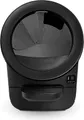 Compact, up to two cats of 3–19 lb, about $599Whisker Litter-Robot EVORotating globe · 3–19 lb · up to 2 cats8.6Price tier: PremiumCheck price
- 8.5Price tier: Mid-rangeCheck price
The short answer: one litter box per cat, plus one. That’s the rule cat vets use, and it’s the starting point whether your boxes scoop themselves or not.
The details matter as much as the number, though. Where the boxes go, how far apart they are and how big they are all affect whether your cats actually use them. And automatic boxes raise a fair question: if a Litter-Robot is rated for four cats, does it count as four boxes?
This guide covers the vet guidance, how we count automatic boxes, and worked examples for homes with one to four cats. We haven’t tested these boxes ourselves. The guidance comes from the American Association of Feline Practitioners (AAFP), the MSD Veterinary Manual and named reviews. It isn’t veterinary advice. If a cat starts going outside the box, talk to your vet, because house-soiling can have medical causes.
To skip the math, use our litter box calculator.
The n+1 rule
The AAFP’s client guide on house-soiling recommends “one litter box for each cat, plus one extra box in multiple locations.” The MSD Veterinary Manual says the same thing in different words: provide “at least one more litter box than the number of cats.”
So the formula is simple. If n is the number of cats, you need n + 1 boxes:
| Cats | Boxes (n+1) |
|---|---|
| 1 | 2 |
| 2 | 3 |
| 3 | 4 |
| 4 | 5 |
The “plus one” gives every cat a choice, including when another cat is using a box. Even a single cat gets a second option if one box is dirty, out of reach or out of service.
One box per floor
The MSD Veterinary Manual adds that multi-floor homes should have a box on each floor. That’s part of the n+1 count, not on top of it. Two cats in a two-story house need three boxes, with at least one upstairs and one downstairs.
This matters most for kittens, older cats and any cat that finds stairs hard. A box on the same floor removes a reason to go elsewhere.
Spacing: side-by-side boxes count as one
The AAFP’s client guide says cats see boxes placed next to each other as a single box. Lining up three boxes along one wall doesn’t give your cats three choices.
Put boxes in different locations. The AAFP also says to avoid busy areas, so a quiet spot away from heavy foot traffic is better than a hallway or beside a loud appliance.
The one exception is a short-term one. During a switch to an automatic box, WIRED suggests placing the new box near the old one. That’s fine for the transition, but once your cat uses the new box, move the second box somewhere else so it counts. Our transition guide has the steps.
Size: 1.5× your cat’s length
The AAFP says a litter box should be about 1.5 times your cat’s length, measured from nose to base of tail. It adds that bigger is better and that many commercial boxes are too small.
The math, at a few lengths:
| Cat length (nose to base of tail) | Box length at 1.5× |
|---|---|
| 14 in | 21 in |
| 16 in | 24 in |
| 18 in | 27 in |
| 20 in | 30 in |
Automatic boxes are harder to size this way. The makers in our data publish entry sizes and outer footprints, not the usable floor area inside. For a big cat, look at the entry and interior height. The Litter-Robot 4 has a 15.75 × 15.75 in entry and 16.5 in interior height, and the open-top Neakasa M1 has no hood at all. Add your cat’s length in the cat safety checker for a fit check, and see our large cats guide.
How automatic boxes fit into the count
Here the sources pull in slightly different directions.
What makers say. Makers rate their boxes for a number of cats. Whisker rates the Litter-Robot 4 for up to four cats and the Litter-Robot EVO for two. Chewy’s listing says the ScoopFree Crystal Smart is designed for one or two cats. Those numbers describe what one machine is designed to handle, not how many boxes your cats need.
What WIRED says. WIRED’s buying guide repeats the “one box for each cat, plus one” rule for traditional boxes, and says that with automatic models there’s less need for multiple options. It still advises keeping your old box out.
What the vet rule is about. The n+1 rule is about choice and location: several boxes in different places, so no cat is ever stuck without one. An automatic box stays cleaner between scoops, but it’s still one box in one spot.
Our recommendation
- Count each automatic box as one box, whatever its cat rating.
- Keep at least one manual box as part of your total. It covers breakdowns, power cuts, sensor faults and the weeks after a new box arrives. WIRED’s Petlibro tester was glad she had a backup when that box got stuck for two days.
- Stay within the maker’s cat rating for each automatic box, and check your lightest cat meets its minimum weight.
Automatic boxes can make the n+1 rule easier to live with, because fewer boxes need daily scooping. The AAFP recommends removing waste at least daily, and the manual boxes still need that.
Worked examples
1 cat, 1 floor: 2 boxes
One automatic box plus one manual box, in different rooms. Any automatic box rated for one cat works, such as the PuraMax 2 or the Litter-Robot EVO. The manual box gets less use, so it’s easy to keep clean. Short on floor space? Our guide to the best self-cleaning litter box for small spaces compares footprints and heights. Calculator: 1 cat, 1 floor.
2 cats, 2 floors: 3 boxes
At least one box on each floor. A practical setup: an automatic box on the main floor where the cats spend most time, plus one manual box upstairs and one manual box downstairs in a different room from the automatic. If you want more automation, make the upstairs box a second automatic and keep one manual. The EVO is rated for two cats, so one EVO can serve both. Calculator: 2 cats, 2 floors.
3 cats, 1 floor: 4 boxes
Four boxes in at least four separate spots. One option: two automatic boxes and two manual. A Litter-Robot 4 is rated for up to four cats, so a single LR4 can handle the waste of all three, but under our rule it still counts as one of the four. See the best box for multiple cats. Calculator: 3 cats, 1 floor.
4 cats, 2 floors: 5 boxes
Five boxes, with at least one on each floor. For example: one Litter-Robot 4 and one manual box on each floor, plus a fifth manual box wherever your cats tend to gather. With four cats, a second automatic box cuts daily scooping a lot. If cats of similar weight share a box, weight-based app tracking may mix them up, so don’t rely on per-cat logs for health. Calculator: 4 cats, 2 floors.
Mixing box types
The MSD Veterinary Manual notes that some cats prefer hooded boxes, and that offering more than one type can help. A home with several boxes is a good chance to offer a choice: a hooded automatic, an open-top automatic like the Neakasa M1 or Lesure, and a plain open manual pan.
Litter matters too. The AAFP says most cats prefer soft, unscented clumping litter, and many dislike aromatic litters, deodorizers and box liners. If one box gets ignored, its litter or location is the first thing to change. Our litter guide covers what each automatic box accepts.
What it costs
More boxes means more litter and supplies, and automatic boxes add liners, filters or trays. To compare, run the cost calculator for your number of cats, and see whether the savings in time make sense in are self-cleaning litter boxes worth it?
Bottom line
Plan for one box per cat plus one, spread around the house, with a box on each floor and each box about 1.5× your cat’s length. Count every automatic box as one box, however many cats it’s rated for, and keep at least one manual box. If you’re adding an automatic, check the Litter-Robot 4 price, the EVO or the PuraMax 2, and compare all 14 models on the litter box chart. Mats and supplies are on our accessories page.
Frequently asked questions
How many litter boxes do I need for 2 cats?
Does a Litter-Robot count as more than one litter box?
Can two litter boxes be next to each other?
How big should a litter box be?
Do I need a litter box on every floor?
Sources
- AAFP/ISFM: House-soiling client guide · checked 2026-11-12 — One litter box for each cat plus one extra in multiple locations; boxes 1.5× the cat's length nose to base of tail; many commercial boxes too small; cats see adjacent boxes as one; avoid busy areas; remove waste at least daily.
- MSD Veterinary Manual: Providing a Litter Box for a Cat · checked 2026-11-12 — At least one more litter box than the number of cats; a box on each floor of multi-floor homes; some cats prefer hooded boxes, and offering multiple types can help.
- AAFP/ISFM: Guidelines for Diagnosing and Solving House-Soiling Behavior in Cats · checked 2026-11-12 — Professional guideline: optimize the litter box and meet the cat's environmental needs.
- WIRED: The Best Automatic Litter Boxes · checked 2026-11-12 — One box for each cat plus one for traditional boxes; with automatic models there's less need for multiple options, but keep the old box out.
- Whisker: Litter-Robot 4 · checked 2026-11-12 — Rated for up to 4 cats, 3–25 lb.
- Whisker: Litter-Robot EVO · checked 2026-11-12 — Rated for up to 2 cats, 3–19 lb.
- Chewy: PetSafe ScoopFree Crystal Smart listing · checked 2026-11-12 — Designed for 1–2 cats; a tray lasts 20–30 days with one cat and 10–15 days with two.
Get new guides by e-mail
One short e-mail when Self-Cleaning Litter Box Guide publishes a new guide. No spam, no sharing your address, and you can unsubscribe in one click.