The Quietest Self-Cleaning Litter Box: Noise Claims, Mechanisms and Picks
Our top picks
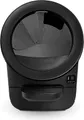 Quietest on independent evidence: WIRED found it near-silent, about $599Whisker Litter-Robot EVORotating globe · 3–19 lb · up to 2 cats8.6Price tier: PremiumCheck price on Amazon
 Lowest maker noise claim: about 30 dB, but cramped, about $599–600Casa Leo Leo's Loo TooTilting drum · 1–20 lb · cats: not stated7.8Price tier: PremiumCheck price
- Quiet on paper and the best value: 35 dB claimed, about $390–400PETKIT PuraMax 2Tilting drum · 3.3–22 lb · cats: not stated8.5Price tier: Mid-rangeCheck price
 Quiet claim plus a bigger entry for large cats, about $500–550PETKIT Purobot Max Pro 2Tilting drum · 3.3–22 lb · cats: not stated8.6Price tier: Mid-rangeCheck price
The quietest self-cleaning litter box on the evidence we can find is the Litter-Robot EVO, which WIRED described as near-silent. If you go by maker claims instead, Casa Leo’s Leo’s Loo Too is lowest at about 30 dB, with PETKIT’s PuraMax 2 and Purobot Max Pro 2 at 35 dB.
We haven’t tested these boxes ourselves, and we haven’t measured any of them with a sound meter. This guide combines maker specs, independent reviews from WIRED, Tom’s Guide and Cats.com, and veterinary placement advice, and we name the source whenever a noise claim appears. Prices are typical street prices from dated sources, so check today’s price, especially during early Black Friday sales.
Quick picks
| Box | Maker noise claim | Design | What reviewers said | Price |
|---|---|---|---|---|
| Litter-Robot EVO | Not published in our sources | Rotating globe | WIRED: near-silent, virtually no odor | ~$599 |
| Leo’s Loo Too | About 30 dB | Tilting drum | Cramped for WIRED’s 12-lb cat; Tom’s Guide’s cats used it about a third as often as the LR4 | ~$599–600 |
| PETKIT PuraMax 2 | 35 dB | Tilting drum | WIRED’s best for most people; tight entry | ~$390–400 |
| Purobot Max Pro 2 | 35 dB (listing: 35–45 dB) | Tilting drum | WIRED’s top pick; its 17-lb cat used it easily | ~$500–550 |
| Litter-Robot 4 | Not published in our sources | Rotating globe | Tom’s Guide’s unit sometimes squeaked | ~$699–749 |
| Neakasa M1 | About 50 dB | Open bowl | Tom’s Guide’s cats used it most | ~$360–450 |
How loud is “quiet”? What the dB numbers can and can’t tell you
Only a few makers publish a decibel figure, and every one of those figures is a maker claim. We don’t know the distance, the room or the test method behind any of them. That limits what you can conclude.
Decibels are logarithmic, and a 10 dB increase is commonly perceived as roughly twice as loud. So the gap between a 30 dB claim and a 50 dB claim could be audible. The gap between 30 dB and 35 dB is small, and we wouldn’t pay a premium for it.
Two things the numbers leave out matter more day to day:
- Cycles are short and intermittent. The box is silent between visits and noisy only while it sifts. What matters is when the cycle runs, not just how loud it is.
- Wear changes the sound. Tom’s Guide’s Litter-Robot 4 sometimes squeaked while cleaning, which it took as a sign the box needs regular maintenance. WIRED’s ELS PET Orbitie needed monthly disassembly because litter in the gears caused grinding. A quiet box can get louder if you skip cleaning. Our troubleshooting guide covers grinding and squeaks.
How the mechanism affects noise
The whole globe turns slowly after each visit, sifting clumps through a screen into a drawer below. The best-known design (Litter-Robot). Large entries, but a tall unit.
Litter-Robot 4, 5, EVOA drum on a base tilts or turns part-way to sift, then returns. Most PETKIT and many Amazon brands. Good ones keep the entrance open the whole time.
PuraMax 2, Purobot, Leo's Loo Too, SmartSpinAn open pan that flips or rotates to dump clumps. No hood to squeeze through and no door to close; more litter scatter.
Neakasa M1, LesureA rake sweeps waste into a covered trough on a disposable crystal tray. Nothing encloses the cat, but you buy trays forever.
ScoopFree Crystal Smart, ClassicAvoid designs with a door or a front that closes during cleaning: if a sensor fails, a cat can be trapped. More in are self-cleaning litter boxes safe?
None of our sources compare mechanisms with a meter, so this is a qualitative guide, not a ranking.
- Rotating globe (Litter-Robot EVO, 4 and 5). The whole globe turns slowly while clumps fall through a screen into a drawer. WIRED found the EVO near-silent. The LR4 is the same design and reviewers have noted maintenance squeaks, which is a reminder that condition matters as much as design.
- Tilting drum (PETKIT, Leo’s Loo Too). The drum moves part of the way rather than turning fully, per Cats.com’s PuraMax 2 review. Leo’s Loo Too and PETKIT make the lowest noise claims among the boxes we cover.
- Open bowl (Neakasa M1, Lesure). The bowl rotates or flips to sift. Tom’s Guide notes the M1 flips its container to dislodge stuck clumps, and Neakasa claims about 50 dB, the highest figure here. Lesure doesn’t publish one in our sources.
- Rake on a crystal tray (ScoopFree Crystal Smart and Classic). Nothing rotates; a rake drags across the tray. PetSafe publishes no noise figure we could find, so we can’t say whether it is quieter or louder than a drum.
For how each design works in detail, see how self-cleaning litter boxes work.
Litter-Robot EVO: the quietest self-cleaning litter box on independent evidence
The EVO is the compact Litter-Robot: a rotating globe in a 20.6 × 24.3 in footprint, rated for up to two cats of 3 to 19 lb. WIRED named it best for small spaces and found it near-silent with virtually no odor, which is the strongest independent statement about noise for any box in our data. Its entrance stays open during cycling, and WIRED’s cat took to it quickly.
Pros
- WIRED: near-silent, virtually no odor
- Smallest Whisker footprint, so it fits an apartment
Cons
- About $599, so it costs more than the PuraMax 2
- Two cats and 19 lb each at most, with weight sensors only (no laser curtain)
- No litter-level sensing, and WIRED saw waste stick to the globe’s ceiling
WIRED’s finding comes from a one-cat test. We don’t have a dB figure to back it up. Check the EVO price, or compare the Whisker lineup in our Litter-Robot 5 vs 4 vs EVO guide.
Leo’s Loo Too: the lowest noise claim, with trade-offs
Casa Leo claims about 30 dB for the motor, the lowest figure in our data. It adds radar, four weight sensors and an anti-pinch sensor, and Tom’s Guide found its small opening contained litter scatter best.
The trade-offs are significant. WIRED’s 12-lb cat found the barrel cramped, and refilling litter through the small opening is fiddly in both WIRED’s and Tom’s Guide’s experience. Tom’s Guide’s cats also used it about a third as often as the Litter-Robot 4. A quiet box your cat avoids doesn’t help you. At about $599 to $600, it costs as much as the EVO. Buy it if you have a small or medium cat, tight floor space and noise at the top of your list. Check the Leo’s Loo Too price.
PETKIT PuraMax 2: quiet claim, best value
PETKIT claims 35 dB for the PuraMax 2, and Cats.com confirms the drum doesn’t turn fully, with the entrance always open. At about $390, it costs roughly $200 less than the EVO or Leo’s Loo Too and WIRED still calls it the best option for most people.
The compromises are the entry, which is 7.87 in tall and cramped for WIRED’s 17-lb cat, and the app, which WIRED found crowded with ads. There is no litter-level sensor either. If you’re on a budget and have an average-size cat, it’s the pick that gives you a low noise claim without paying a premium. Check the PuraMax 2 price, or see how it compares in Litter-Robot 4 vs PETKIT PuraMax 2.
PETKIT Purobot Max Pro 2: quiet claim for bigger cats
PETKIT also claims 35 dB for the Max Pro 2, though the Amazon listing gives 35 to 45 dB, so the real figure may be higher. It has a larger entry of 10.51 × 10.74 in, WIRED’s 17-lb cat used it easily, and it adds a camera for about $500 to $550. The entry sits roughly 10 in off the floor, which is a step up for stiff senior cats. Choose it if your cat is too big for the PuraMax 2 and you want a drum design. Check the Max Pro 2 price.
What to skip if noise is your priority
- Furbulous Self-Packing. Cats.com’s reviewer found it loud enough to scare her cats, and the maker’s own figure is 37 dB during packing. It also refused to cycle and has a design that could trap a cat if the sensors failed. See our review.
- Neakasa M1, if bedroom noise is critical. It has the highest maker figure here at about 50 dB (a bundle page says 48 dB). It is a good box for large cats and cats that avoid hoods, as our open-top guide explains, but it is not the one to pick for silence.
- Any box you won’t maintain. Squeaks and grinding develop when litter builds up in the mechanism.
How to choose a quiet box
- Fit your cat first. Check weight limits and entry height with the cat safety checker. A cramped cat avoids the box regardless of volume.
- Look for a maker dB claim, then discount it. A published figure is better than none, but a 5 dB difference is noise. Treat 30 to 35 dB as roughly equivalent and 50 dB as a visible step up.
- Prefer boxes with adjustable delays or schedules. WIRED suggests schedules and do-not-disturb, and the Lesure’s app has an adjustable delay. Control over when the box cycles is worth more than a few dB.
- Pick a design that keeps its entrance open. That is a safety rule, not a noise rule. WIRED only recommends boxes that stay open during cycling, and it counts the EVO, PuraMax 2 and Purobot Max Pro 2 among them. Our data doesn’t confirm it for Leo’s Loo Too, so check before you buy.
- Use a hard, level floor. Cats.com’s tester turned auto-scoop off when the PuraMax 2 sat on carpet because the weight sensor became inaccurate.
You can filter by your own priorities in the litter box matcher, or see every spec in the comparison chart.
Tips for nervous cats
A noisy cycle that starts while a cat is sniffing the entry can set the whole transition back. Our transition guide has the full plan. The short version:
- Keep automatic cleaning off at first. Let the cat use the box while it stays still. Whisker’s semi-automatic routine for small kittens is to leave the unit powered off and start cycles yourself, and the same approach works for a nervous adult.
- Start cycles yourself when the cat is out of the room, then watch how it reacts to the sound and the movement.
- Turn automatic mode on with the longest delay, and be home for the first few cycles.
- Keep the old box until the cat uses the new one regularly, as WIRED advises. A manual box also gives you the “plus one” box vets recommend.
- Don’t change the litter at the same time. One unfamiliar thing at a time works best. See best litter for self-cleaning litter boxes.
- Watch for bolting or avoidance after cycles start. If your cat avoids the area, move to a quieter spot or slow down.
Some cats won’t accept any motor. If yours is very sensitive to noise or change, a large manual box may be the better choice, as we explain in are self-cleaning litter boxes worth it.
Bedroom and apartment placement
- Think about the walls. A box against a bedroom wall will be heard more than one in a hallway bathroom or laundry nook. Pick a spot away from where you sleep when you can.
- Avoid loud appliances and busy areas. The AAFP says to avoid busy areas, and a spot beside a washer or a main thoroughfare can make cats uneasy.
- Use a hard, level floor. It keeps the weight sensor accurate. A level box also won’t rock on its feet while it turns.
- Set the delay or schedule to match your night. If the app allows it, choose the longest delay and a do-not-disturb window that covers sleep. Cycles then run when you are not trying to sleep.
- Keep a manual box as a backup. If you’d rather switch the robot off overnight, your cat still has somewhere to go.
- Allow airflow. A sealed closet muffles noise but traps smell. See our odor fixes guide.
A mat under or beside the box catches scatter, and the accessories page has options.
| Item | Type | Fits | Buy |
|---|---|---|---|
| Gorilla Grip cat litter mat, 35 × 23 in Big enough to catch scatter from most globe boxes; textured backing stays put. | Litter mat | Any box | Check price |
| Gorilla Grip cat litter mat, extra large, 40 × 28 in The size we'd put under open-top boxes, which both WIRED and Tom's Guide found fling more litter. | Litter mat | Any box | Check price |
| iPrimio jumbo cat litter trapper mat, 32 × 30 in Honeycomb two-layer mat with a waterproof layer, for cats that kick litter far. | Litter mat | Any box | Check price |
Who should skip a self-cleaning box for noise reasons
- Very noise-sensitive cats. Hesitation, bolting or avoidance after the first cycles are signs to go back to a manual box.
- Studio apartments with the box next to the bed. Even a near-silent box moves after each visit, and you will hear it at night.
- Households that won’t do upkeep. Maintenance noise is a real thing.
Bottom line
For the quietest self-cleaning litter box we can back up, buy the Litter-Robot EVO if you have one or two cats under 19 lb. Pick Leo’s Loo Too only if its small opening suits your cat, and the PuraMax 2 if you want a low noise claim for about $390. For a larger cat, look at the Purobot Max Pro 2. Whatever you choose, introduce it slowly and give the cat a quiet place to use it.
See the full ranking in the best self-cleaning litter boxes of 2026. If you’re shopping the early sales, our Black Friday guide explains what counts as a good price.
Frequently asked questions
What is the quietest self-cleaning litter box?
How loud are self-cleaning litter boxes?
Is the Litter-Robot loud?
Can I keep a self-cleaning litter box in a bedroom?
Will a self-cleaning litter box scare my cat?
Do open-top self-cleaning litter boxes make more noise?
Sources
- WIRED: The Best Automatic Litter Boxes · checked 2026-11-12 — Litter-Robot EVO is the best for small spaces and near-silent; WIRED recommends schedules and do-not-disturb; Leo's Loo Too was cramped for WIRED's 12-lb cat.
- Casa Leo / Smarty Pear: Leo's Loo Too · checked 2026-11-12 — Casa Leo claims about 30 dB for the motor (a maker claim).
- PETKIT: PuraMax 2 · checked 2026-11-12 — PETKIT claims 35 dB in operation; the anti-pinch design keeps the entrance open during rotation.
- PETKIT: Purobot Max Pro 2 · checked 2026-11-12 — PETKIT says 35 dB; the Amazon listing says 35–45 dB.
- Neakasa: M1 product page · checked 2026-11-12 — Neakasa lists about 50 dB for the M1.
- Tom's Guide: I asked cats to test these robotic litter boxes · checked 2026-11-12 — Litter-Robot 4 sometimes squeaked while cleaning; cats used Leo's Loo Too about a third as often as the LR4; the M1 flips its container to dislodge clumps.
- Cats.com: Furbulous self-cleaning litter box review · checked 2026-11-12 — The reviewer found the box very loud at first, loud enough to scare her cats.
- Cats.com: PETKIT PuraMax 2 review · checked 2026-11-12 — Entrance always open and drum doesn't turn fully; tester turned auto-scoop off on carpet because the weight sensor became inaccurate.
- AAFP/ISFM: House-soiling client guide · checked 2026-11-12 — Avoid busy areas for litter boxes; most cats prefer unscented clumping litter.
Get new guides by e-mail
One short e-mail when Self-Cleaning Litter Box Guide publishes a new guide. No spam, no sharing your address, and you can unsubscribe in one click.