Best Self-Cleaning Litter Box With Health Monitoring: Weight, Visit and Camera Tracking Compared
Our top picks
 Best overall: WIRED's top pick, with a 1080p camera and stool and urine records, about $500–550PETKIT Purobot Max Pro 2Tilting drum · 3.3–22 lb · cats: not stated8.6Price tier: Mid-rangeCheck price on Amazon
 Best app for weight and visit tracking: no camera, about $699–749Whisker Litter-Robot 4Rotating globe · 3–25 lb · up to 4 cats8.7Price tier: PremiumCheck price
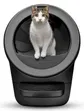 Best for urine-vs-stool tracking: WasteID, but it needs Whisker+, $799 at WhiskerWhisker Litter-Robot 5Rotating globe · 3–30 lb · up to 5 cats8.5Price tier: PremiumCheck price
 Cheapest weight log: time, weight and duration of each visit, about $340–400PetSafe ScoopFree SmartSpin Self-Cleaning Litter BoxTilting drum · 2.5–25 lb · cats: not stated7.9Price tier: Mid-rangeCheck price
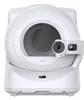 Most gadgets: camera, stool snapshots and self-bagging, about $800PETKIT Purobot UltraTilting drum · 3.3–22 lb · cats: not stated7.9Price tier: FlagshipCheck price
The best self-cleaning litter box with health monitoring for most homes is the PETKIT Purobot Max Pro 2, which pairs a 1080p camera and face recognition with stool and urine records for about $500–550. If you’d rather have weight and visit tracking from a more established app and no camera, the Litter-Robot 4 is the box to buy.
One caution before the details: no litter box diagnoses anything. These boxes record visits, weight and sometimes photos or waste type, and that can tell you something has changed. It can’t tell you why, and your vet is the one who can. Early Black Friday sales are live at some retailers, so we’ll also point out where to check prices, but we don’t quote sale prices here.
We haven’t tested these boxes ourselves. This guide draws on maker specs, our own model reviews and independent testing, mainly by WIRED and Tom’s Guide, and we name the outlet whenever a test result appears. Prices are typical street prices from dated sources, so check today’s price.
Health monitoring features compared
| Box | What it tracks | Extra cost | Cat weight (maker) | Price |
|---|---|---|---|---|
| Purobot Max Pro 2 | 1080p camera, face and weight recognition, stool and urine records | Free Care+ trial, then check PETKIT’s terms | 3.3–22 lb, 6+ months | ~$500–550 |
| Litter-Robot 4 | Visits, weight, cat ID by weight, litter-low and drawer-full alerts | None stated in our sources | 3–25 lb | ~$699–749 |
| Litter-Robot 5 | Adds WasteID (urine vs stool) | Whisker+, about $80 a year (WIRED) | 3–30 lb | $799 at Whisker |
| ScoopFree SmartSpin | Time, weight and duration of each visit | None stated | 2.5–25 lb, 6+ months | ~$340–400 |
| Purobot Ultra | Camera, night vision, stool snapshots, face ID | Check PETKIT’s terms | 3.3–22 lb, 6+ months | ~$800 |
| ScoopFree Crystal Smart | Visit counter and tray reminders | None stated | Not published | ~$186–300 |
What these boxes actually record
Health monitoring is a bundle of different features, and it helps to separate them:
- Visit logs. When and how often a cat uses the box. This is the simplest signal, and every app-connected box in our lineup offers some version of it.
- Weight. Sensors under the box record a weight at each visit. The Whisker app tracks it, and the SmartSpin’s app logs each visit’s weight and duration.
- Cat identification. In a multi-cat home, the box has to decide which cat visited, by weight or by face. Per-cat data is only as good as that decision.
- Waste type. WasteID on the Litter-Robot 5 distinguishes urine from stool visits.
- Photos and video. PETKIT’s camera boxes keep stool and urine records or snapshots after each cycle.
What none of them does is interpret the data. Weight from a litter box sensor is a trend line, not a clinical measurement, and a cat that avoids the box leaves no data at all.
Purobot Max Pro 2: Best overall
The Purobot Max Pro 2 is WIRED’s current top pick, and it’s the one box here where the monitoring and the basics both hold up. PETKIT says the camera is 1080p with a 210° view, recognizes up to 15 cats by face and weight, and keeps stool and urine records. The entry is 10.51 × 10.74 in, 43% larger than the previous generation, and WIRED’s 17-lb cat used it easily. The limits are 3.3–22 lb and 6 months of age, and the 8 L bin is rated for up to 17 days with one cat.
Pros
- Camera plus records in one box, at well under a Litter-Robot 4
- Two Wi-Fi bands (2.4 and 5 GHz)
- PETKIT says 12 safety sensors stop the drum when a pet is nearby, and WIRED counts it among boxes that stay open while cycling
Cons
- WIRED found the app crowded with ads
- Cat identification got confused for some WIRED testers after the free Care+ trial ended, which matters if per-cat tracking is why you’re buying
- The entry sits about 10 in off the floor, a real step for a stiff senior cat, who is also the cat most likely to benefit from monitoring
- The camera isn’t movable
Check the Purobot Max Pro 2 price. Read our full review before you decide.
Litter-Robot 4: Best app for weight and visit tracking
The Litter-Robot 4 has no camera. What it has is the app WIRED calls great. According to WIRED and Tom’s Guide, the Whisker app tracks visits and weight, tells cats apart by weight, and warns when litter is low or the drawer is full. It’s rated for up to four cats from 3 to 25 lb, and Whisker says a laser curtain and weight sensors pause the cycle when a cat enters or leaves.
Pros
- The most polished tracking app in our lineup, with visit and weight tracking and no camera
- Roomy 15.75 × 15.75 in entry
- Among the boxes that stay open while cycling, per WIRED
Cons
- About $699–749, roughly double a PuraMax 2
- After nearly two years, WIRED’s unit sometimes sensed “ghost cats” and reported a full drawer when it was half full. If your data is the point, that’s the failure to watch for
- Weight-based cat ID can mix up cats of similar weight
Check the Litter-Robot 4 price. For a multi-cat home, see our multi-cat guide.
Litter-Robot 5: Best for urine-vs-stool tracking
The Litter-Robot 5 adds WasteID, which Whisker says tells urine visits from stool visits. It’s the closest thing here to a log of what your cat did, not just when. It’s rated for up to five cats from 3 to 30 lb and costs $799 at Whisker. Whisker also sells an LR5 Pro with dual AI cameras for $999; we haven’t added it to our lineup.
The catches are cost and maturity. WasteID and cat identification need Whisker+, about $80 a year per WIRED. In WIRED’s testing both worked only intermittently for the first four months, then improved markedly after firmware updates. WIRED also found the touchscreen finicky. If WasteID is the reason you’re shopping, see the full Litter-Robot 5 vs 4 vs EVO comparison. Check the Litter-Robot 5 price.
ScoopFree SmartSpin: Cheapest weight log
The SmartSpin is the budget route into weight tracking. Its app logs each visit’s time, weight and duration, and it takes ordinary clumping litter. PetSafe rates it for cats up to 25 lb, and WIRED found it worked surprisingly well. PetSafe lists it at $399.99, and WIRED lists it at $340.
Cons: it relies on weight sensing alone, with no infrared or laser, and the Amazon listing says to keep auto-clean off until a kitten is at least 2.5 lb and 6 months old. It sits 12 in off the floor, and WIRED says it feels “kinda cheap”. It’s 2.4 GHz Wi-Fi only. Check the SmartSpin price.
Purobot Ultra: Most gadgets, least insight per dollar
The Purobot Ultra bags its own waste and films every visit, with night vision, two-way audio and stool snapshots after each cycle. WIRED rated it 8 out of 10 and found it kept odors down. But it found the video black-and-white and low detail and the analytics flat, and it was hard to refill because of the camera arm. At about $800, it’s the most expensive box here and the Max Pro 2 gives you a camera for much less. We’d choose it only if you want self-bagging as well. Check the Purobot Ultra price.
The simplest option: ScoopFree Crystal Smart
If you only want a visit counter and a reminder, the Crystal Smart has an app that PetSafe describes as a health counter and tells you when the tray is due. It’s not a weight tracker, and it needs PetSafe’s crystal trays at about $24.50 each, so it suits one cat that already likes crystals. Our open-top guide covers how rake boxes differ from the rest.
How to choose
Match the data to what you’d really use
- Trend watching for a healthy adult cat. Visits and weight are enough. The Litter-Robot 4 or SmartSpin covers it.
- Several cats and you want to know who did what. Look at per-cat identification: face and weight on the Max Pro 2, weight on the Whisker boxes. Ask what happens to that feature when a trial or subscription ends.
- A cat with a medical history. Ask your vet what to track. Then pick the box that records it, and keep a manual log as a backup.
Check the fine print
- Subscriptions. WasteID and cat ID on the LR5 need Whisker+, and PETKIT’s Care+ starts as a free trial. Factor the yearly cost into the cost calculator.
- Wi-Fi. The PuraMax 2, SmartSpin and Lesure are 2.4 GHz only, while the Max Pro 2 supports both bands. Our explainer on apps has the full list.
- Sensor safety first. Tracking is a bonus. Confirm your cat’s weight and age fit the box’s range with the cat safety checker, and read our safety guide.
- Which cat is it? If two cats weigh about the same, weight-based ID won’t separate them.
Want only boxes with an app? Filter them in the litter box matcher, or compare everything in the full comparison chart.
Using the data without over-reading it
The data is most useful as a baseline. Look at a few weeks of visits and weights while your cat is well, so a change stands out later. A few habits keep it honest:
- Check for sensor errors first. WIRED’s Litter-Robot 4 reported “ghost cats” as it aged. A sudden jump may be the box, not the cat.
- Check the cat ID. Confirm entries belong to the right cat before you act on them.
- Look at the cat. Appetite, energy and behavior tell you more than a graph.
When to call your vet
Call your vet if your cat goes outside the box, strains, goes more or less often than usual, you see blood, its habits change suddenly or it seems unwell in any other way. The AAFP and ISFM guideline on house-soiling looks at the cat’s health as well as the box and its environment, which is why a litter box problem can be a medical one. Bring the app’s records, noting which cat they belong to. See also how to transition a cat to an automatic box.
Who should skip a monitoring box
- Shoppers who mostly want convenience. If the logs won’t change what you do, a cheaper box from our best self-cleaning litter boxes list saves money. Our worth-it guide covers the costs.
- Owners hoping to replace vet visits. The data supplements an exam and doesn’t stand in for one.
- Anyone uneasy about a camera or an always-connected device. The Max Pro 2 and Ultra have cameras. The Litter-Robot 4 and SmartSpin track without one.
- Kitten owners. Check each box’s minimum weight and age before turning on auto cleaning.
Black Friday and early sales
Early Black Friday sales are live at some retailers, and prices on Litter-Robots, PETKIT and PetSafe boxes move often. We don’t quote sale prices because we can’t verify them. Our Black Friday guide explains how to tell a real discount from an inflated list price. Check the return window too, since a monitoring box is worth little if your cat won’t use it.
Bottom line
Buy the Purobot Max Pro 2 for the best mix of camera, records and price, and the Litter-Robot 4 if you want the steadier app and no camera. Pay for the Litter-Robot 5 only if WasteID matters and you accept Whisker+ and a few months of firmware settling, and the SmartSpin if you want a weight log on a budget. Whichever you choose, treat the numbers as a prompt to look closer at your cat and a record for your vet, not a verdict.
Frequently asked questions
What is the best self-cleaning litter box with health monitoring?
Can a smart litter box detect health problems?
Do you need a subscription for litter box health tracking?
Is an automatic litter box with a camera worth it?
How accurate is litter box weight tracking with more than one cat?
When should I show my vet the litter box data?
Sources
- WIRED: The Best Automatic Litter Boxes · checked 2026-11-12 — Purobot Max Pro 2 is the top pick; Whisker+ costs about $80 a year; LR5 WasteID and cat ID were intermittent for four months, then improved; LR4 showed ghost-cat errors after about two years; PETKIT's app is crowded with ads; Whisker app praised; boxes that stay open while cycling.
- Whisker: Litter-Robot 5 · checked 2026-11-12 — 3–30 lb, up to five cats, WasteID, multiple lasers plus weight sensors, $799; LR5 Pro $999 with dual AI cameras.
- PETKIT: Purobot Max Pro 2 · checked 2026-11-12 — Entrance 10.51 × 10.74 in, 3.3–22 lb, 8 L bin up to 17 days, 12 safety sensors, 1080p 210° camera.
- PetSafe: ScoopFree Crystal Smart · checked 2026-11-12 — Crystal litter only; tray change about once a month; app health counter.
- Tom's Guide: I asked cats to test these robotic litter boxes · checked 2026-11-12 — Cats used the Neakasa M1 51 times in one week and the Litter-Robot 4 30 times; the Whisker app tells cats apart by weight.
- AAFP/ISFM: Guidelines for Diagnosing and Solving House-Soiling Behavior in Cats · checked 2026-11-12 — Professional veterinary guideline on diagnosing house-soiling, which looks at the cat's health and environment as well as the litter box.
Get new guides by e-mail
One short e-mail when Self-Cleaning Litter Box Guide publishes a new guide. No spam, no sharing your address, and you can unsubscribe in one click.